
Does Flavored Coffee Break a Fast?

Flavored coffee does not break a fast when you drink it black. The flavoring oils on the bean carry no sugar and almost no calories. A brewed cup lands near 2 calories, the same as plain black coffee.
What breaks a fast is the syrup, creamer or milk added afterward. Medical fasts and religious fasts follow stricter rules than intermittent fasting does.
Is Flavored Coffee Considered Black Coffee?
Flavored coffee counts as black coffee whenever nothing else goes into the cup. Folgers defines black coffee as ground coffee and water, served without additives like cream or sugar. A hazelnut or vanilla bean meets that definition. The flavor rides on the bean, not in a bottle at the counter.
The confusion comes from two products sharing one word. Flavored coffee is the bean itself, infused with flavor compounds at the roastery. A flavored coffee drink is ordinary coffee with syrup, sauce or sweetened creamer poured in at the mug.
Simply Fresh Foodie makes the same call for fasting purposes. Flavored coffee containing flavoring as part of the brew is still black coffee when nothing is added. Vanilla, hazelnut and caramel roasts all sit inside that boundary.
Caffeine content does not shift either. The Coffee Beanery lists flavored and traditional coffee at identical caffeine levels, decaf aside.
Why Does Flavored Coffee Taste Sweet Without Sugar?
Flavored coffee tastes sweet because aroma compounds read as sweetness on the palate. Roasters apply food-safe flavoring oils to the beans after roasting. No sweetener enters the process. Your brain reads vanilla and caramel notes as sugar that is not actually there.
The dose behind that effect is tiny. Flavoring concentrate is extremely strong, so roasters apply roughly 3 percent of the beans' weight. That works out near 3 pounds (1.4 kilograms) of oil per 100 pounds (45 kilograms) of coffee.
A single flavor profile can contain dozens of aromatic compounds, sometimes close to 100. Flavor chemists blend naturally derived extracts with synthesized molecules to hold a profile stable on the shelf. None of those compounds is a sweetener.
The Coffee Beanery describes its flavored range as carrying a hint of sweetness with no sweeteners of any kind. The mechanics of that application are covered in full in our guide to how flavored coffee is made.
Do Flavored Coffee Beans Have Enough Calories to Break a Fast?
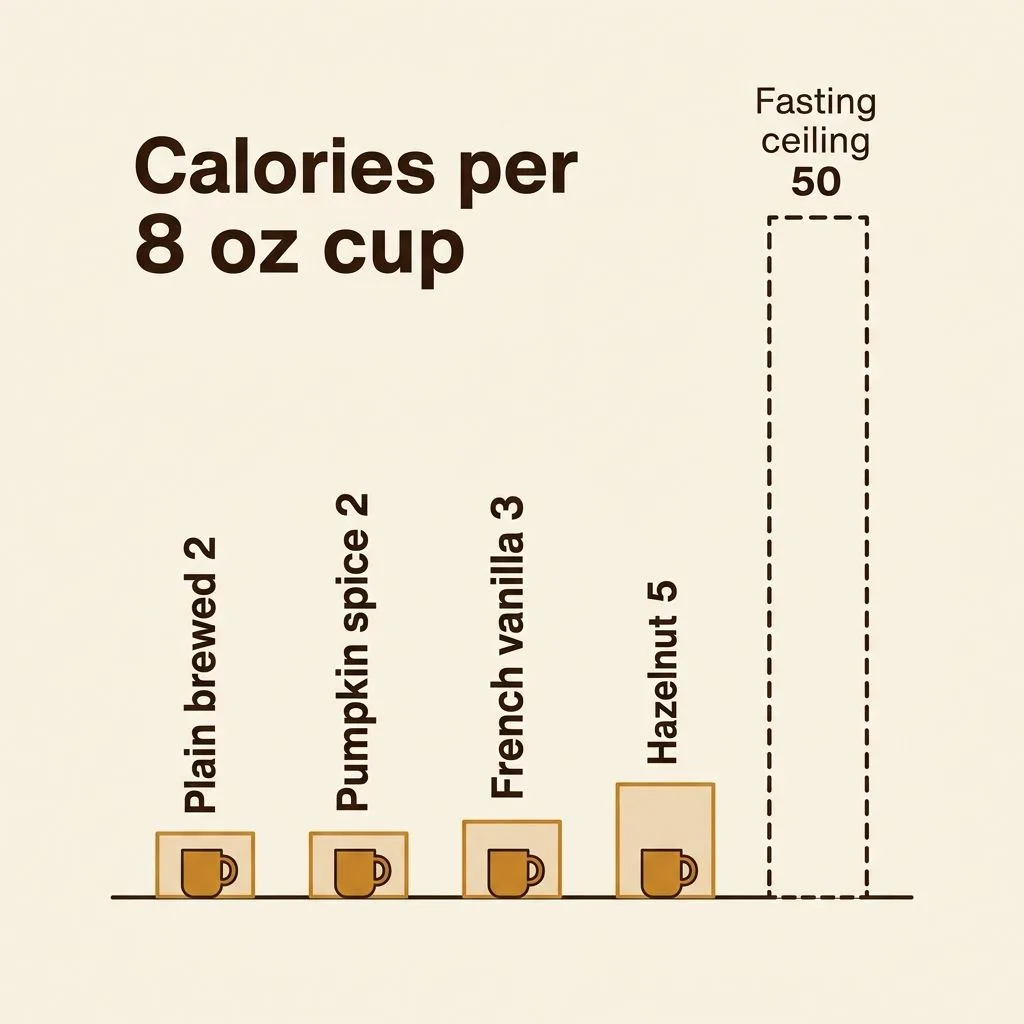
Flavored coffee beans do not carry enough calories to break a fast. A brewed 8 ounce (237 millilitre) cup of black flavored coffee lands between 0 and 5 calories. United States Department of Agriculture FoodData Central puts plain brewed coffee at about 2 calories per 8 ounces. It records no carbohydrate.
Roaster nutrition figures for how many calories flavored coffee has track that number closely. Lifeboost lists black hazelnut coffee at 5 calories per 8 ounces, French vanilla at 3 and pumpkin spice at 2. Java City publishes 0 to 5 calories for the same serving. Its table lists 0 grams of sugar, carbohydrate and fat.
Flavor oils and extracts contribute no usable calories or carbohydrate that the body absorbs. One divergent entry exists and is worth naming. Virta Health lists a serving of "flavored coffee" at 5 grams of carbohydrate. It adds 0.3 grams of protein and 2 grams of fat. Those numbers describe a prepared drink rather than a plain brew.
A black cup has no fat source at all. Weigh the bean-only figures accordingly. Fasting practitioners commonly work to an informal ceiling of 50 calories inside the fasting window. Black flavored coffee sits far below it.
Does Flavored Coffee Spike Insulin During a Fast?
Flavored coffee does not produce a meaningful insulin spike on its own. Black coffee carries no sugar, so there is nothing to raise blood glucose. Bones Coffee and Mozza Roasters both report the same position. Caffeine can lift cortisol mildly, and that is a separate response from insulin.
Controlled evidence supports the calm reading, with one honest caveat. Sciarrillo and colleagues published a coffee and fasting trial in Clinical Nutrition ESPEN in 2021. Participants drank 8 ounces of black coffee after a 10 hour overnight fast. The coffee did not affect baseline or postprandial triglycerides and glucose. The authors describe the sample as small.
A contrasting result sits in the older literature and deserves a mention. Keijzers and colleagues reported a contrary finding in Diabetes Care in 2002. Intravenous caffeine reduced insulin sensitivity by 15 percent against placebo in 12 healthy volunteers. That trial delivered pure caffeine into a vein, not brewed coffee into a stomach. The result does not translate directly to a morning cup.
Neither study tested flavored coffee specifically. The evidence is inherited from plain black coffee, and it inherits cleanly. The flavoring oil changes nothing in that metabolic picture.
Does Flavored Coffee Break an Intermittent Fast?
Flavored coffee does not break an intermittent fast when the bag carries no added sugar. Autumn Elle Nutrition states the case plainly for hazelnut beans. They contain no carbohydrate, sugar or protein, so drinking them black holds a true or fasting-mimicking fast intact.
The bag itself decides the answer, not the flavor name on the front. Mozza Roasters clears flavored coffee beans for fasting as long as they contain no added sugar or syrups. Mystic Monk draws the same line.
Pods deserve a closer look than whole beans do. Angelino's reports that most flavored pods suit a fast, then warns that some brands sweeten the charge inside the cup. Read the label once per brand and the question is settled.
Coffee may even work with the fast rather than against it. Pietrocola and colleagues reported in Cell Cycle in 2014 on coffee and autophagy. Both caffeinated and decaffeinated coffee triggered autophagy in mice within one to four hours. The effect appeared across liver, muscle and heart tissue. That result comes from an animal model, not a human trial, so treat it as suggestive rather than settled.
Which Flavored Coffee Add-Ins Break a Fast?
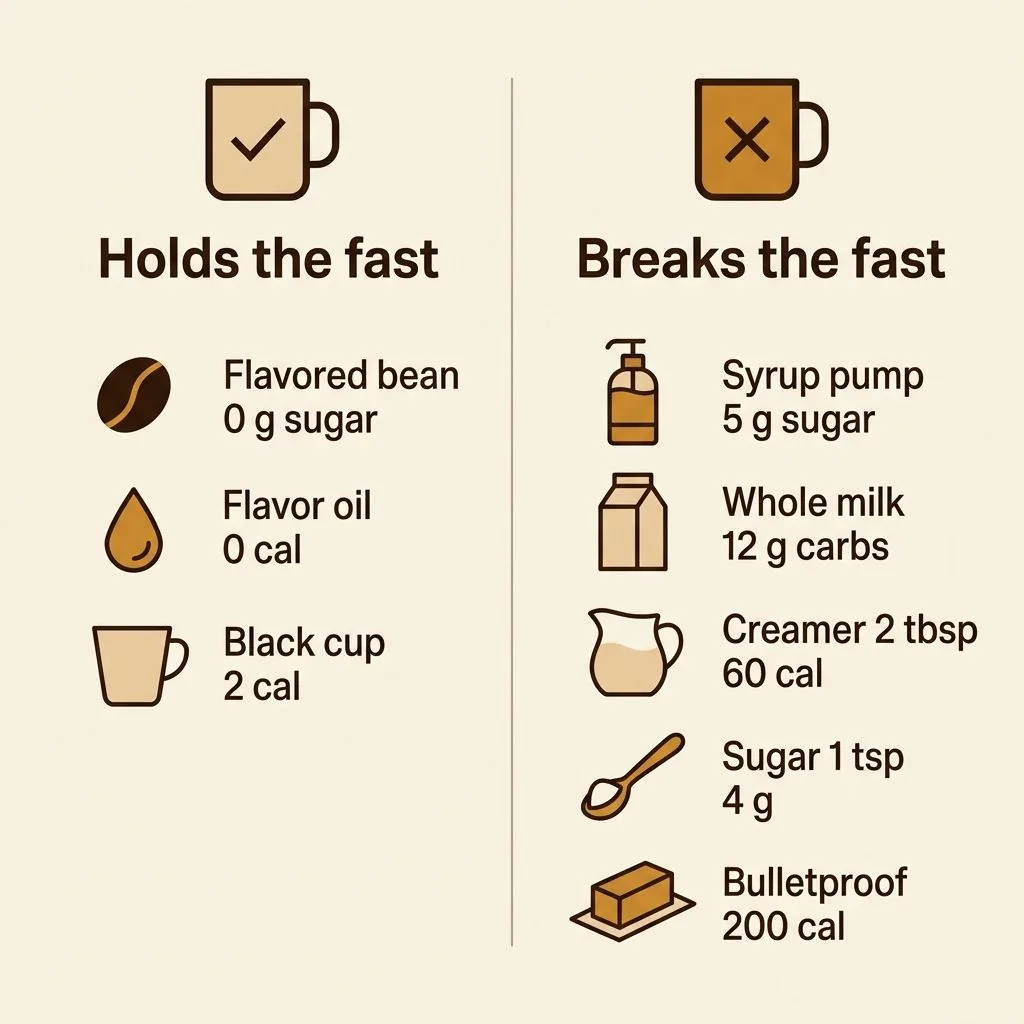
Sugar, syrup, milk, cream and butter all break a fast. Bones Coffee puts it directly. Any form of sugar or flavored syrup ends a fast by triggering an insulin spike.
The bean was never the problem. Everything poured in after brewing is.
The numbers show how quickly a fasted cup stops being one. One pump of flavored syrup adds 5 to 20 grams of sugar. Autumn Elle Nutrition puts a Starbucks vanilla pump at roughly 5 grams. Two tablespoons of flavored creamer bring 60 to 80 calories, per Java City.
Bones Coffee lists whole milk at about 12 grams of carbohydrate per cup. Half-and-half sits near 10 grams and heavy cream near 9.1 grams. A single teaspoon of sugar adds about 4 grams and a tablespoon of honey about 17. Bulletproof coffee, built on butter and MCT oil, runs 200 to 450 calories per cup, which ends any standard fast. A 16 ounce Starbucks hazelnut latte reaches roughly 340 calories.
Artificial sweeteners occupy contested ground. The wider question of whether flavored coffee is bad for you covers those sweeteners in detail. Sucralose, aspartame, saccharin, stevia and monk fruit carry no calories, and some people still show an insulin response to them. Strict fasters skip all of them.
Can You Drink Flavored Coffee Before a Blood Test?
No, skip flavored coffee before a fasting blood test. Cleveland Clinic instructs patients to avoid any coffee, including black coffee, while fasting for blood work. Caffeine can skew results. Coffee also acts as a diuretic, which can make the blood draw itself harder.
Medical fasting runs on different rules from weight-loss fasting. Cleveland Clinic puts the typical requirement at eight to 12 hours before the draw. Fasting glucose tests, lipid panels and triglyceride measurements all sit in that group. Lifeboost states that most medical fasts prohibit flavored coffee outright and directs patients to water only.
The research picture is genuinely mixed here, which is worth knowing rather than hiding. The Sciarrillo trial above found no such effect from black coffee. Clinical instructions still say water, because a lab result carries consequences that a fasting window does not.
Follow the order sheet from your provider, not the study. If you drink coffee by accident before a draw, tell the phlebotomist rather than staying quiet.
Does Flavored Coffee Break a Religious Fast?
Yes, flavored coffee generally breaks a religious fast. Most religious fasts prohibit food and drink together during the fasting period. Mystic Monk, roasted by Carmelite monks, states the position bluntly. If your fast is a religious obligation, drinking anything at all breaks it.
The rules vary by tradition and by ruling within a tradition. Lifeboost names Ramadan, Yom Kippur and Lent as the common examples. Some observances carve out an exception for water, and occasionally for plain black coffee or tea. Flavored coffee rarely qualifies for those exceptions, since the flavoring reads as an indulgence rather than a necessity.
Check with your own religious guidance rather than a coffee blog. A metabolic argument about calorie counts does not answer a question about religious observance. The two fasts measure entirely different things.
How Much Flavored Coffee Can You Drink While Fasting?
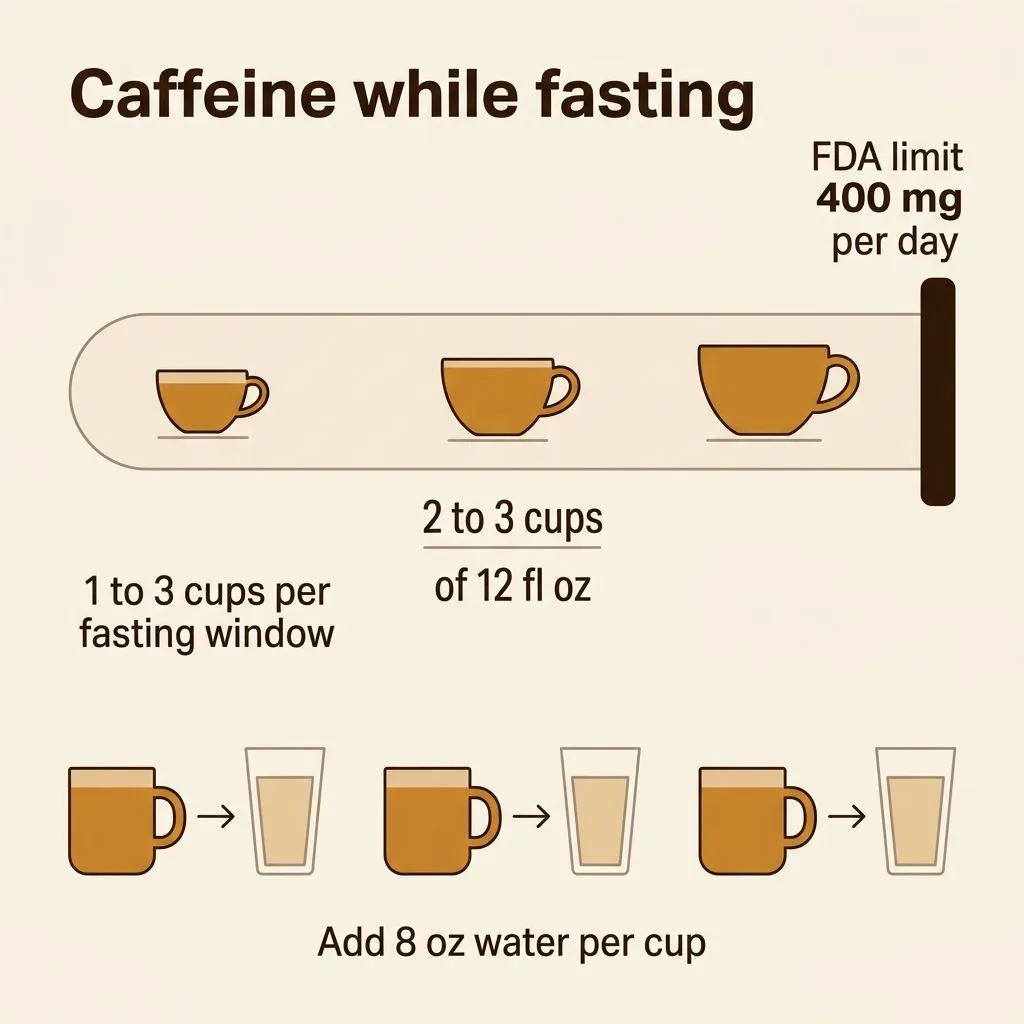
Keep flavored coffee to one to three cups during a fasting window. Bones Coffee and Mozza Roasters both land on that range. It works out to 8 to 24 fluid ounces (237 to 710 millilitres). The Food and Drug Administration cites 400 milligrams of caffeine a day as safe for most healthy adults.
The agency equates that ceiling with roughly two to three 12 fluid ounce cups. Sensitivity varies with body weight, medication and medical conditions, so that figure is a ceiling rather than a target.
Fasting sharpens the side effects that caffeine already carries. Mystic Monk and Bones Coffee both flag digestive discomfort, jitteriness, acid reflux and dehydration risk on an empty stomach.
Hydration deserves separate attention during a long fast. Mozza Roasters recommends matching every cup with at least 8 ounces (237 millilitres) of water. Timing matters as well. A cup early in the fasting window suppresses appetite when hunger peaks, and a late cup mostly costs you sleep.
Which Flavored Coffee Can You Drink While Fasting?
Choose whole bean or ground flavored coffee whose label lists no added sugar or sweetener. Colipse Coffee, a specialty roaster, describes its naturally flavored beans as fasting friendly and matching black coffee in macros. Twisted Goat reports the same for artificially flavored beans. Both brew clean inside a fasting window.
Two details separate a good fasting pick from a mediocre one. Arabica is the smoother base, and Mozza Roasters calls it the better fasting option than Robusta. A smoother cup is easier to drink black, which is the whole point.
Mystic Monk frames the choice well. The best coffee to drink while fasting is whichever roast or flavor you will actually enjoy without cream. Pods need the label check that whole beans usually do not, per the pod warning above. Dessert-forward flavors such as hazelnut, French vanilla, salted caramel and mocha all exist in unsweetened bean form.
Does Snickers Flavored Coffee Break a Fast?
Snickers flavored coffee fits the fasting rules above when you brew it black. The ground and K-Cup versions contain no sugar. Both brew to a near zero calorie cup.
The bottled Snickers Iced Coffee ends a fast outright. It contains 220 calories per bottle from milk and sugars. Treat it as a dessert drink, not a fasting coffee.
Do you want flavored coffee that actually tastes like the dessert on the bag? Start with our picks for the best flavored coffee beans.