
Is Flavored Coffee Bad for You?
Flavored coffee is not bad for you in any way current evidence demonstrates. The flavoring is oil applied to roasted beans at about 3 percent of their weight. Its carrier, propylene glycol, is affirmed as safe for food by federal regulation.
The real nutritional load comes from syrup, creamer and sugar added after brewing. The genuine risks that exist attach to flavor factory workers and to people with nut allergies.
What Is Actually Added to Flavored Coffee?
What is added to flavored coffee is a flavor oil, applied after roasting. That oil holds concentrated flavor compounds dissolved in a carrier liquid. The carrier is usually propylene glycol.
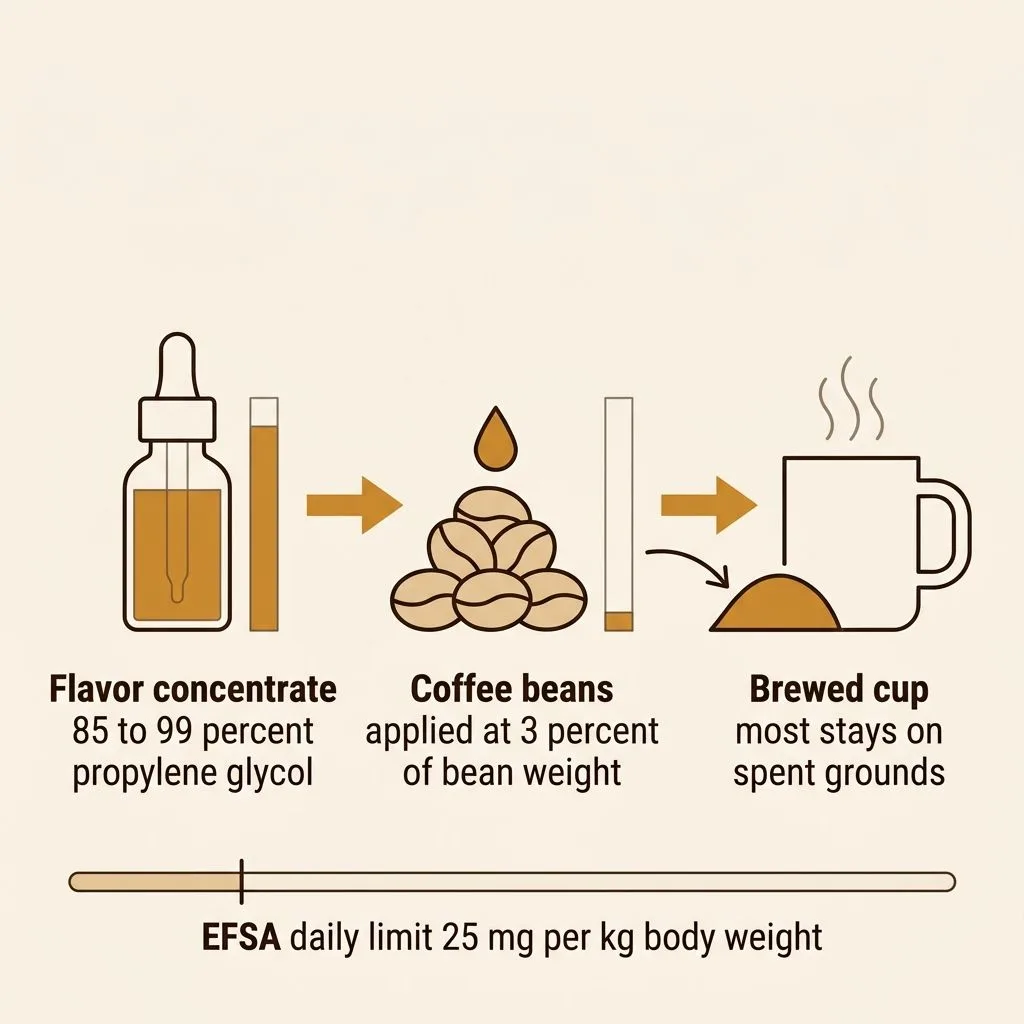
Roasters dose it at roughly 3 percent of the beans' weight. Nothing else joins the bean.
The categories on the bag are legal terms, not marketing language. Section 101.22(a)(3) of title 21 of the Code of Federal Regulations (CFR) defines a natural flavor by its source material. Qualifying sources include spices, fruit, vegetables, edible yeast, herbs, bark, roots and leaves. Meat, seafood, poultry, eggs and dairy products qualify as well.
Under 21 CFR 101.22(a)(1), an artificial flavor is any flavor-imparting substance drawn from outside those sources. Source decides the category. Chemistry does not. A lab-made molecule identical to a natural one still counts as artificial. Some specialty roasters stay on the natural side of that line. Colipse Coffee infuses its flavored range with natural extracts and lists no artificial flavors, dyes or preservatives.
One thing that never joins the bean is sugar. Any sweetness in your cup is poured in later, not roasted onto the bean.
Is Propylene Glycol in Flavored Coffee Safe?
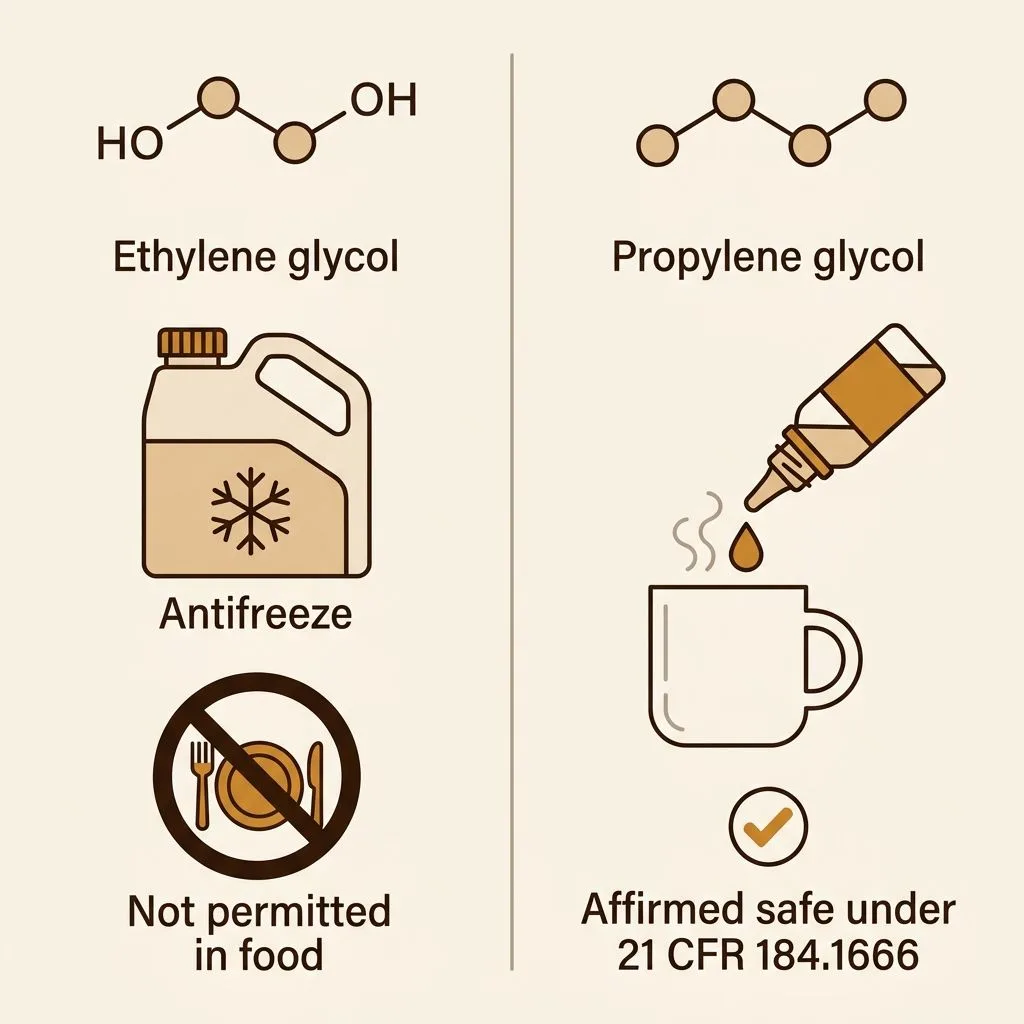
Propylene glycol is safe at the amounts used in flavored coffee. The Food and Drug Administration affirms it as generally recognized as safe under 21 CFR 184.1666. European regulators reached the same conclusion independently. Two separate regulatory systems reviewed the same compound and cleared it.
The federal regulation sets real numeric limits. 21 CFR 184.1666 caps propylene glycol at 97 percent in the seasonings and flavorings category. Every other food category is capped at 2 percent. The European Union authorises the same compound as additive E 1520.
The European Food Safety Authority re-evaluated it in 2018. That review kept the existing acceptable daily intake unchanged. The limit is 25 milligrams per kilogram of body weight per day. The figure was first set by the Joint FAO/WHO Expert Committee on Food Additives in 1973.
The Scientific Committee on Food confirmed it in 1996. The 2018 review also measured real dietary exposure across population groups. Neither average nor high-end intake exceeded that limit anywhere. One number does get quoted alarmingly and deserves context.
Propylene glycol makes up most of a flavor concentrate by volume, between 85 and 99 percent by roasters' own accounts. That concentrate is then applied at the 3 percent dose named above. Most of it stays on the spent grounds rather than dissolving into your cup.
Is Flavored Coffee Made With Antifreeze?
Flavored coffee is not made with antifreeze. The claim confuses two different compounds with similar names. Ethylene glycol is the toxic antifreeze ingredient, and it is not permitted in food.
Propylene glycol is the food-grade compound used in flavor oils. They are not the same substance.
The confusion has a real root worth naming. The Agency for Toxic Substances and Disease Registry addresses this directly. Propylene glycol does serve as an antifreeze in one specific setting. That setting is machinery where a leak might contact food, precisely because the compound is safe to eat.
The same agency records the Food and Drug Administration's classification of it as generally recognized as safe for food use. A compound can hold two jobs without either job poisoning the other. Several coffee retailers state the claim far more strongly than the evidence supports. One asserts propylene glycol is not made for human consumption at all.
That statement contradicts 21 CFR 184.1666 directly. Every roaster making the strongest version of this claim also sells unflavored or solvent-free coffee. Their commercial interest does not make them wrong, but it does warrant reading them alongside the regulation itself.
Are Artificial Flavors in Coffee Bad for You?
Artificial flavors in coffee are not bad for you at normal consumption. Individual flavoring substances go through documented safety review before use. The word artificial describes where a molecule came from. It does not describe how the molecule behaves in your body.
A frequent complaint holds that nobody checks what hides behind natural and artificial flavors. That complaint is not accurate. The Flavor and Extract Manufacturers Association Expert Panel has assessed flavor ingredient safety since 1960. The panel runs six to eight members drawn from toxicology, organic chemistry, biochemistry, metabolism and pathology.
It has cleared more than 2,800 flavoring substances as generally recognized as safe. The panel is industry-funded rather than a government agency, which is worth knowing. It is still a real, documented, published review process. Labeling rules add a second layer.
21 CFR 101.22(i)(2) requires the word artificial beside any flavor name an artificial flavor simulates. That wording must appear in letters at least half the height of the flavor name. Three specific compounds get named repeatedly in warnings about flavored coffee, and each deserves an honest accounting. Diacetyl carries a genuine documented hazard.
The National Institute for Occupational Safety and Health published recommended exposure limits for it in 2016. Those limits are 5 parts per billion for diacetyl and 9.3 parts per billion for 2,3-pentanedione, measured as 8-hour averages. The stated aim is preventing obliterative bronchiolitis, an irreversible lung disease. That hazard comes from inhaling vapour in flavor manufacturing plants.
It does not come from drinking a brewed cup. 4-methylimidazole is the second. The International Agency for Research on Cancer placed it in Group 2B, possibly carcinogenic to humans, in Monographs Volume 101.
It forms during production of certain caramel colours. Caramel colour is a colouring agent used in syrups and soft drinks, not a bean flavoring oil. Sucralose and potassium sorbate complete the list.
Potassium sorbate is generally recognized as safe under 21 CFR 182.3640. Sucralose is an approved food additive under 21 CFR 172.831, cleared in 1998 after formal review. Both live in syrups and creamers rather than in flavored beans.
Does Flavored Coffee Add Sugar to Your Cup?
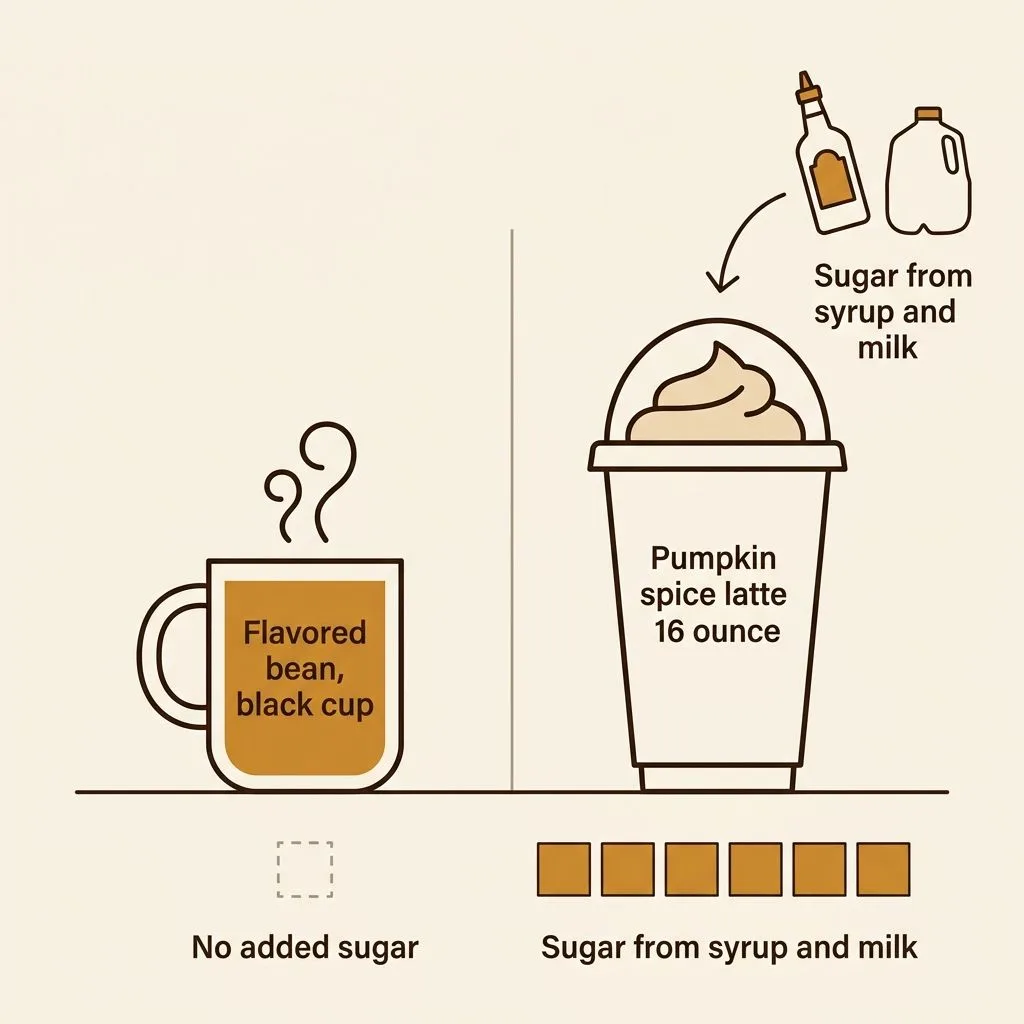
Flavored coffee beans add no sugar to your cup. The flavor oil delivers vanilla or hazelnut taste without any sweetener. A black cup of hazelnut coffee carries the same sugar as a black cup of unflavored coffee. That amount is essentially none.
The distinction that matters is bean against beverage. A flavored bean and a flavored cafe drink are different products with different nutritional profiles. Roasters who track this point out how far apart they sit. One contrasts an aromatically flavored Arabica cup, where flavored coffee's calories round to zero, against a 16 ounce pumpkin spice latte.
Another notes that somebody ordering elaborate flavored drinks several times daily could pass 25 teaspoons of sugar in a day. That second figure is one roaster's illustration rather than a measured average. The direction it points is sound even if the number is not verified. Flavored beans are how you get dessert flavor without the dessert.
Is It Bad to Drink Flavored Coffee Every Day?
Drinking flavored coffee every day is not bad for most people. The daily exposure to flavoring compounds stays far below any regulatory limit. What you add to the cup matters much more than what the roaster added to the bean.
The honest state of the evidence deserves stating plainly. No study has examined ordinary flavored coffee consumption against disease outcomes in humans. Searches for flavored coffee health cohorts, dietary propylene glycol effects and coffee flavoring safety studies all came back empty. The available evidence is regulatory and toxicological rather than epidemiological.
General coffee-consumption studies do not fill that gap, because they measure a different exposure. Absence of a study is not evidence of harm, and it is not evidence of safety either. What the exposure arithmetic supports is a reassuring picture. Flavoring covers the bean as a thin surface coat, not a bulk ingredient.
Most of that load stays behind on the grounds, per the exposure path above. The resulting daily intake sits far beneath the acceptable daily intake European regulators confirmed. The weight of trade sources agrees that moderate flavored coffee raises no serious concern. Roasters who argue otherwise sell the alternative, as noted above.
Who Should Avoid Flavored Coffee?
Three groups have real reasons to avoid flavored coffee. People with tree nut allergies face a cross-contact risk. Flavor manufacturing workers face a documented inhalation hazard. People who prefer to skip synthetic additives have a preference-based reason rather than a medical one.
The nut allergy case is the one worth the most care. Hazelnut and almond flavored coffees rarely contain real nuts, because the flavor in hazelnut flavored coffee comes from oils rather than nut solids. The residual risk sits in shared processing equipment. A roaster running many flavors through one line cannot rule out trace transfer.
Only an explicit nut-free or dedicated-facility statement removes that uncertainty. Anyone with a severe tree nut allergy should contact the roaster before brewing. The occupational case is different in kind. Its exposure route is the workplace vapour described above, at concentrations no drinker meets.
The third group is not facing a health risk at all. Propylene glycol is synthetic and petroleum-derived, and some people simply prefer to avoid such ingredients. That is a legitimate personal choice. It is not the same thing as a demonstrated harm, and honest sources keep the two separate.
What Are Healthier Alternatives to Flavored Coffee?
The healthier alternatives to flavored coffee are whole spices, solvent-free flavored beans, and coffee infused at origin. Each delivers added flavor by a different route. None requires giving up flavored coffee entirely, since the baseline product is already safe.
Whole spices are the simplest route and the oldest one. Cinnamon, cardamom, nutmeg, cloves and ginger all flavor coffee with no carrier solvent involved. Unsweetened cocoa powder, vanilla extract, citrus zest and coconut work the same way. You add them to the grounds before brewing or stir them into the finished cup.
This method predates oil-based flavoring by centuries. Solvent-free flavored coffee is the second route. Some roasters flavor beans without a propylene glycol carrier and label the result accordingly. The category is real, though the comparative taste claims attached to it come from the roasters selling it.
Infused coffee is the third and most distinctive route. Green beans are fermented with fruits, spices or yeasts before processing, at origin rather than after roasting. Jill Hoff directs coffee and education at Monogram Coffee.
She won the 2020 Canadian Barista Championships. Hoff says these coffees come largely from Colombia and Costa Rica. The flavor there is developed by the producer rather than applied by the roaster.
Is Flavored Coffee Creamer Bad for You?
Flavored coffee creamer is a genuinely different product from flavored coffee beans, and it deserves separate treatment. A flavored bean contributes flavor oil and nothing else. A flavored creamer contributes fat, sugar, emulsifiers and preservatives. Non-dairy creamers commonly contain hydrogenated or partially hydrogenated oils, which supply the texture that dairy would otherwise provide.
Sweetened varieties carry real sugar in real quantities, measured per tablespoon rather than per bottle. Sugar-free varieties substitute sucralose, the approved food additive covered above. Potassium sorbate often appears as the preservative, cleared under the same additive rules. Every one of those ingredients is legally cleared for food use.
The concern with creamer is nutritional rather than toxicological. The individual additives are permitted and reviewed. The combined product still adds calories, sugar and processed fat to a drink that had almost none.
Two tablespoons in each of three daily cups compounds quickly across a week. Reading the panel on the bottle answers this better than reading the front label. Watch the added sugars line and the serving size.
Serving sizes on creamer bottles run smaller than most people pour. Anyone wanting dessert flavor without that load has a straightforward option available. A flavored bean delivers the hazelnut or vanilla note without the creamer's fat and sugar.
Can You Use Flavored Coffee Grounds on Plants?
You can put flavored coffee grounds on plants, but plain unflavored grounds are the better choice. Spent coffee grounds are a long-established garden amendment, valued for nitrogen content and for improving soil structure. Flavored grounds carry something plain grounds do not. Residual flavor oil and its propylene glycol carrier stay behind on the grounds after brewing.
That residue is the same material that makes flavored beans leave a sticky film inside a grinder. Soil is not a grinder, and the quantities involved are small, but the residue is real.
No study has tested flavored coffee grounds against plant or soil health. The honest answer therefore stays at the level of mechanism rather than measurement. Propylene glycol is water-soluble and biodegradable, which argues against accumulation in soil. The added oils and any sweetened residue could attract pests or feed mould in a compost pile.
Practical guidance follows from that. Compost flavored grounds rather than applying them directly, and mix them thinly with other material rather than layering them thick. Save your plain grounds for the beds and borders where they do the most good. If you brew both, keeping the two kinds of spent grounds in separate containers costs nothing.
Does How Flavored Coffee Is Made Affect Its Safety?
The manufacturing method is what keeps your exposure small. Roasters hold the dose to the 3 percent ceiling above, and how flavored coffee beans are made explains how.
Does Flavored Coffee Break a Fast?
Fasting drinkers meet the same split between bean and cup. A black flavored cup holds near 2 calories, so whether flavored coffee breaks a fast depends on the add-ins. Syrup, creamer and milk each end a fast outright.
Is Snickers Flavored Coffee Bad for You?
Snickers flavored coffee has the same safety picture as any flavored coffee above. The bean itself contains no sugar. White Coffee Company flavors medium roast coffee with caramel, peanut, nougat and chocolate notes. The flavorings follow the same FDA rules covered in this guide.
The add-ins decide the health math, exactly as with every flavored cup. Black Snickers coffee stays a near zero calorie drink. A bottled Snickers iced coffee is a dessert drink at 220 calories. The moderation guidance in this article applies unchanged.
Flavored coffee is safe to drink, and the bean underneath the flavoring is what decides whether it is worth drinking. You want flavored coffee that actually tastes like the dessert on the bag. Start with our picks for the best flavored coffee beans.